Table of Contents
- Key Points
- What Is Earth Moving?
- Basic Steps of Earth Moving in Construction
- The Earth Moving Process
- Choosing the Right Dirt Moving Company
- The Bottom Line
- References
Key Points
- Earth moving is an essential part of most construction projects.
- It requires specialized equipment and expertise to ensure precision, efficiency, safety, and regulatory compliance.
- Understanding the basics of earth moving can help you identify the best contractor for your project needs, constraints, and goals.
One of the most critical phases of any building project is earth moving. In fact, the market size for earth moving has continued to grow—currently at almost $96 billion—and is expected to reach approximately $117 billion by 2030.1 But site preparation is not just a preliminary step but rather the foundation upon which every successful construction project is built.
If you are planning a commercial development, residential subdivision, or industrial facility in the Upstate, the quality of earth-moving work will directly impact your project’s timeline, budget, and long-term success. Let’s explore why this essential service deserves your careful attention and how professional expertise can make all the difference.
What Is Earth Moving?
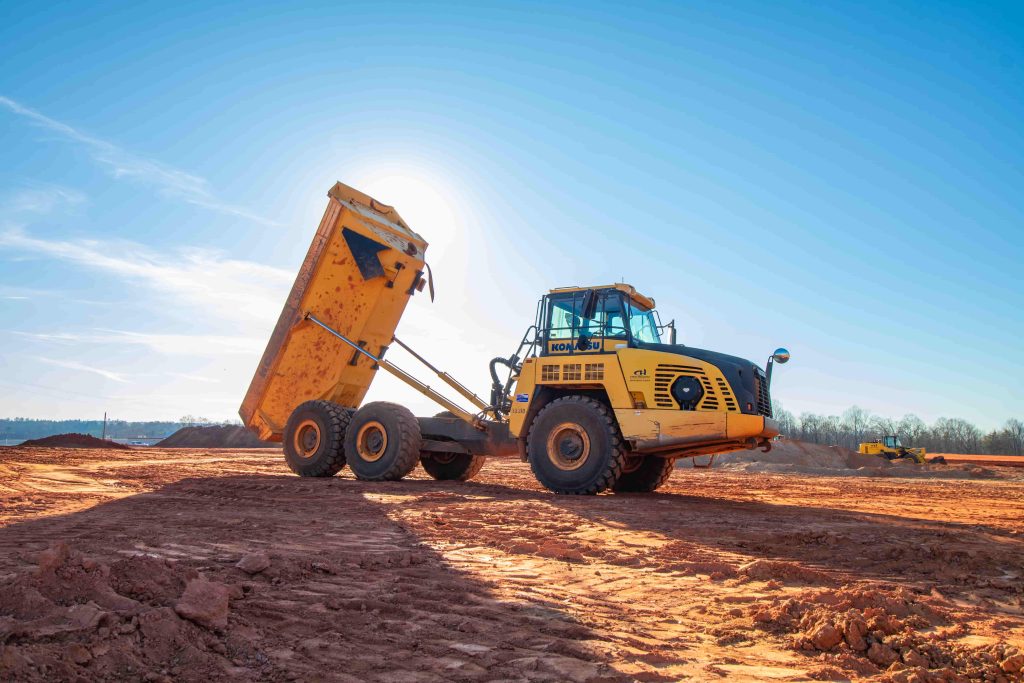
Earth moving refers to a complex set of processes of relocating soil, rock, and other materials to prepare a site for construction. This entails excavation, grading, trenching, and land shaping using specialized heavy equipment. While it might seem straightforward, effective earth moving requires extensive knowledge of soil composition, drainage patterns, local regulations, and engineering principles.2
Basic Steps of Earth Moving in Construction
There are a few main phases involved in the earth moving process.
Creating a Stable Foundation
The most fundamental purpose of earth moving is creating a level, stable base for construction. Buildings, roads, parking lots, and other structures require solid ground that can support their weight without settling or shifting over time.3
Improper earth moving and grading can lead to:
- Foundation problems that compromise structural safety
- Drainage issues causing water accumulation and erosion
- Costly repairs that could have been prevented with proper initial preparation
- Project delays due to unstable ground conditions
Establishing Proper Drainage
Water management is one of the most crucial aspects of site preparation. A skilled dirt-moving company like Collins Hammett will know how to shape terrain to direct water away from structures and prevent pooling. This involves:
- Creating appropriate slopes and contours
- Installing drainage systems and retention ponds
- Ensuring compliance with stormwater management regulations4
- Protecting neighboring properties from runoff issues
Poor drainage does not just create insignificant puddles; it can undermine foundations, cause flooding, damage landscaping, and create liability issues. Professional moving dirt services prevent these problems before they start.
Optimizing Site Layout
Earth moving allows you to maximize your property’s potential by reshaping the landscape to suit your specific needs. For commercial construction projects, this might mean creating level parking areas, loading docks, or building pads where none existed before. The right dirt-moving company can transform challenging terrain into valuable, usable space.
Meeting Regulatory Requirements
Every construction project must comply with local zoning laws, building codes, and environmental regulations. Professional grading and earth-moving services ensure your site meets all requirements, including:
- Erosion and sediment control measures
- Stormwater management compliance
- Environmental protection standards
- Accessibility requirements
Working with an experienced dirt-moving company in Greenville, SC, means you can avoid the prospect of costly violations or project shutdowns due to regulatory issues.
The Earth Moving Process
At CollinsHammet Construction, our commercial construction projects in Greenville, SC, follow a systematic approach:
- Site Assessment and Planning: Before any earth-moving equipment arrives on site, we conduct thorough surveys and soil analysis. This planning phase identifies potential challenges and allows us to develop the most efficient strategy for your specific property.
- Clearing and Demolition: If your project requires land clearing, we begin by removing vegetation, structures, and debris. This creates a clean slate for the grading work to follow.
- Excavation and Rough Grading: Using the right earth-moving equipment, we remove or redistribute soil to create the basic contours specified in your site plan. This phase establishes the general elevations and slopes needed for your project.
- Fine Grading: Precision land grading refines the surface to exact specifications. This critical step ensures proper drainage and creates the level surfaces needed for construction.
- Compaction and Stabilization: Proper soil compaction ensures that your site will not settle or shift after construction begins. We achieve the density requirements specified by your project’s engineering plans.
- Erosion Control: We implement erosion control measures to protect your site and surrounding properties during and after the dirt-moving process. This includes installing silt fences, stabilizing slopes, and managing stormwater runoff.
Choosing the Right Dirt Moving Company
Not every dirt-moving company is on the same level, when it comes to expertise and service. When looking for the best construction Greenville SC has to offer, consider these factors:
- Experience with similar projects in your industry and scale
- Modern, well-maintained fleet of earth-moving equipment
- Skilled operators trained in safety and efficiency
- Knowledge of local regulations and permitting requirements
- Proven track record with references from past clients
- Comprehensive insurance and safety protocols
Collins Hammett Construction brings decades of experience to every commercial construction project, combining technical expertise with a commitment to customer satisfaction.
The Bottom Line
Quality earth-moving work is an investment in your project’s success. While it may be tempting to cut corners during site preparation, the consequences of subpar services can be devastating. Foundation failures, drainage problems, and structural issues cost far more to fix than they would have cost to prevent. If you need dirt moving or other commercial construction services, including demolition, grading, or erosion control, give us a call. We would be happy to discuss your project goals and offer insights into how to make it as smooth, efficient, and economical as possible.
References
- “Earthmoving Market Report 2026,” The Business Research Company, February 2026, https://www.thebusinessresearchcompany.com/report/earthmoving-global-market-report.
- James P. Hambleton, “Earthmoving through the lens of geotechnical engineering,” Department of Civil and Environmental Engineering, Northwestern University, December 2017, https://www.researchgate.net/publication/321768039_Earthmoving_through_the_lens_of_geotechnical_engineering.
- Kai-Fang Yang, Min-Liang Chi, Chang-Jie Xu, et al., “Development of surface settlement under the combined effect of foundation pit dewatering and excavation: Insights from experimental modelling,” Underground Space, Vol. 26, February 2026, https://www.sciencedirect.com/science/article/pii/S2467967425001102.
- “Stormwater Regulations,” South Carolina Department of Environmental Services, retrieved on February 3, 2026, from: https://des.sc.gov/programs/bureau-water/stormwater/stormwater-regulations.

Thomas R. Strange III is a member at Collins Hammett Construction, LLC, located in Upstate, SC. He grew up in the grading industry, starting his career with summer and after-school jobs in 1992. In 1997, he began working full-time, running equipment for numerous projects in the area. Find him on LinkedIn.