Table of Contents
- Hauling Within the Site Preparation Framework
- Material Destination: On-Site Processing and Storage
- Environmental Considerations and Regulatory Alignment
- Scope of Services
- Selecting a Site Preparation Partner in the Upstate
- References
Hauling is often treated as a logistical afterthought in commercial site development—a line item to be outsourced and forgotten. At Collins Hammett Construction, we take a fundamentally different view. Hauling is not a stand-alone service we offer in isolation, but an integrated component of the full-service commercial site preparation process.
How a contractor manages material transport directly affects project timelines, cost efficiency, and environmental compliance. Of all this matters to the professionals overseeing commercial and industrial development in the Upstate.
If you are a project manager or anyone seeking commercial construction services, keep reading. This post explores everything you need to know about the vital role of hauling, and why hiring a reputable contractor is so important.
Hauling Within the Site Preparation Framework
Effective site preparation requires tight coordination across multiple disciplines. At Collins Hammett, hauling functions as a connective element within that framework, running concurrently with land clearing, grading, erosion control, excavation, and other site work phases.
Material movement is not scheduled around the job but as part of the job, with our hauling operations calibrated to the pace and sequencing of every other task on site. This level of integration is only achievable when hauling is managed in-house rather than delegated to third-party operators who are working multiple contracts and prioritizing their own schedules.
Owner-Operated Fleet: Operational Advantages
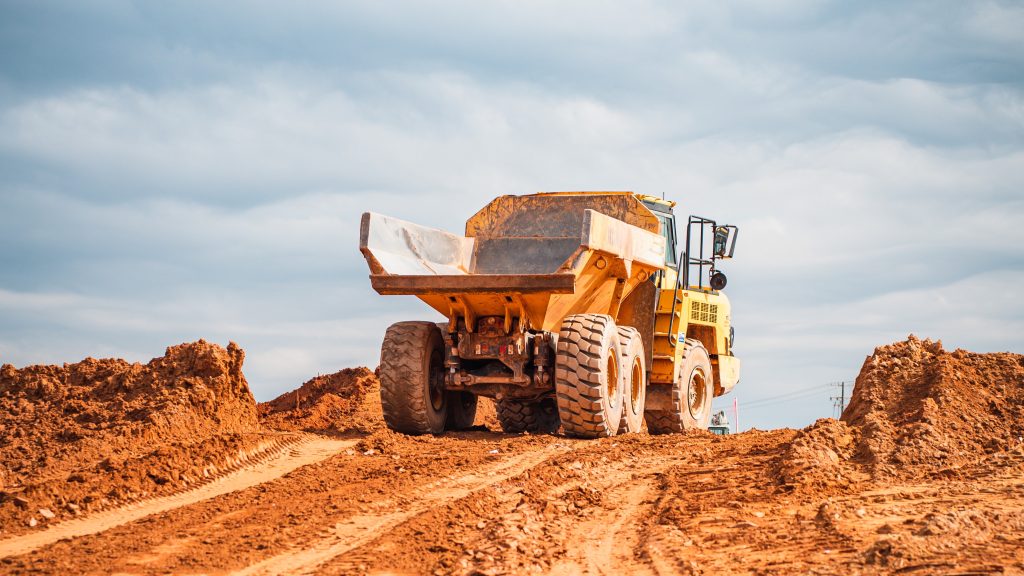
Collins Hammett owns and operates its own dirt-moving and other materials transport fleet, an arrangement that yields measurable advantages for commercial and industrial clients. These include:
- Operational synchronization: Our fleet operates as a fully coordinated extension of the site crew—not an independent variable.
- Schedule control: Our trucks deploy on our timeline, not a subcontractor’s. When site conditions demand immediate material movement, we respond without waiting for outside coordination.
- Cost efficiency: Owner-operated equipment eliminates third-party markup. Clients benefit from more competitive pricing across the full scope of site preparation services.
- Accountability: Our drivers are Collins Hammett employees. They are subject to the same quality standards and site protocols as every other member of the crew, ensuring consistent performance throughout the project.
For project managers and developers who understand the downstream consequences of hauling delays, the distinction between owner-operated and subcontracted transport is not a minor consideration.
Material Destination: On-Site Processing and Storage
The question of where excavated and demolished materials go is central to both project economics and environmental responsibility. At Collins Hammett, the answer is straightforward: materials come to our own facility, where they are processed for reuse or stored for deployment on future projects.
Asphalt is a highly recyclable material. In fact, it is the most recycled material in America.1 On our sites, removed asphalt is transported to our home base of operations, where it is stockpiled and processed into a recycled base material.
Crushed asphalt from this milling pile can be used in future access roads, parking areas, or other such projects. This closed-loop approach eliminates the dual expense of landfill disposal and new material procurement.
Excavated soil and fill dirt are directed to our bar pit, an on-site storage area that functions as a readily accessible material reserve. As a dirt-moving company Greenville SC contractors trust, maintaining an on-hand supply of quality fill is a significant operational asset. It eliminates sourcing delays, reduces dependence on external suppliers, and allows us to respond efficiently when land grading, elevation correction, or site leveling requirements arise mid-project.
Environmental Considerations and Regulatory Alignment
Construction and demolition debris constitutes one of the largest waste streams generated in the United States, with approximately 600 million tons generated every year.2 For contractors operating in regulated commercial and industrial environments, responsible material management is increasingly a compliance matter as well as an ethical one.
Collins Hammett’s hauling and material reuse model supports both:
- Asphalt diversion: As mentioned, crushed asphalt processed through our milling pile is diverted from landfill disposal entirely, repurposed as a functional base material on subsequent projects.
- Soil reuse: Fill material stored in our bar pit is redeployed across projects, reducing the extraction demand for new soil and minimizing the volume of material entering the waste stream.
- Reduced vehicle emissions: Transporting materials to our own facility rather than distant disposal sites reduces cumulative truck mileage and associated fuel consumption—a measurable reduction in the project’s overall carbon footprint.
- Alignment with sustainable development standards: Clients pursuing LEED certification or working within sustainability-focused development frameworks benefit from partnering with a contractor whose material handling practices support those goals.
For developers, general contractors, and project owners navigating environmental permitting or green building requirements, these are not incidental benefits. They represent tangible, documentable contributions to a project’s sustainability profile.
Scope of Services
Collins Hammett’s integrated hauling capability is one component of a comprehensive site preparation offering that includes:
- Construction land clearing, including vegetation removal, stump grinding, and debris management
- Grading services, from rough grading through finished work
- Erosion control, including silt fencing, sediment basins, and stabilization measures
- Excavation and earthwork for commercial and industrial development sites
- Asphalt and paving crews across all project phases
Our hauling operations support every one of these services, ensuring that material movement never becomes the bottleneck that delays project delivery.
Selecting a Site Preparation Partner in the Upstate
When it comes ot commercial construction in the Upstate, the operational capacity a contractor brings to a project determines how reliably commitments are met. Collins Hammett’s owner-operated fleet, on-site material processing, and integrated approach to hauling reflect an investment in the comprehensive approach that commercial and industrial clients require.
We welcome the opportunity to discuss our capabilities and how our approach to hauling and material management aligns with your project’s scope, timeline, and sustainability requirements. Contact Collins Hammett Construction to start that conversation.
References
- Amlan Mukherjee, PhD, “Asphalt is America’s most recycled material,” National Asphalt Pavement Association, retrieved on February 18, 2026, from: https://www.asphaltpavement.org/expertise/sustainability.
- “Construction and Demolition Debris: Material-Specific Data,” U.S. Environmental Protection Agency, October 2025, https://www.epa.gov/facts-and-figures-about-materials-waste-and-recycling/construction-and-demolition-debris-material.

Thomas R. Strange III is a member at Collins Hammett Construction, LLC, located in Upstate, SC. He grew up in the grading industry, starting his career with summer and after-school jobs in 1992. In 1997, he began working full-time, running equipment for numerous projects in the area. Find him on LinkedIn.